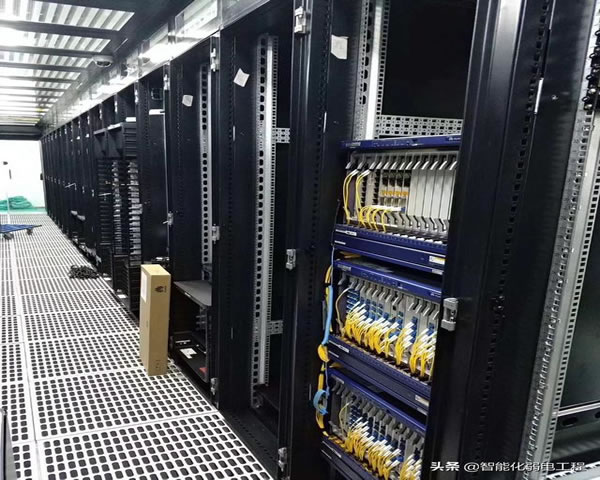
As the demand for low latency and high availability increases in both the Korean market and among users worldwide, utilizing Korean-based cloud servers and implementing multi-region deployments has become a key strategy. This article provides professional guidance on the advantages of multi-region deployment, key design considerations, as well as operational and compliance aspects, to help enterprises achieve a balance between localized services and disaster recovery capabilities.
Why choose Korean cloud servers as nodes for multi-region deployment?
South Korea boasts well-developed network infrastructure and a large number of mainstream Internet access points, which significantly reduce RTT when located near the target users. Choosing a cloud server in South Korea as a node not only meets local compliance requirements but also serves as an important transit point within the Asia-Pacific region strategy, thereby enhancing the overall stability and response speed of services.
The key advantages of multi-region deployment
Multi-region deployment helps to spread risks geographically, enabling fault isolation and ensuring business continuity. By distributing computing and storage resources across different regions, enterprises can quickly redirect traffic in the event of a single-point failure, thereby minimizing the impact of downtime and enhancing service availability and user trust. This approach is particularly beneficial for businesses in the e-commerce, media, and finance sectors.
Enhance business disaster recovery capabilities
Configuring multiple availability zones or city nodes on cloud servers in South Korea allows for hot standby, cold standby, or active-active architectures. By combining automated fault detection with traffic switching mechanisms, the system can seamlessly recover in the event of local failures, reducing recovery time and ensuring the continuous operation of critical services, thereby achieving higher SLA objectives.
Improve access speed and user experience
Deploying in multiple regions across Korea helps to shorten the physical network distance between users and the nearest nodes, thereby reducing latency and improving page loading times as well as API response speeds. In combination with CDN, edge caching, and intelligent routing strategies, the delivery of both static and dynamic content can be further accelerated, thereby enhancing the overall user experience on both mobile and desktop devices.
Key considerations for network and architecture design in multi-region deployments
When designing a multi-region architecture, priority should be given to planning the network topology, bandwidth redundancy, and the reliability of cross-region links. By properly defining service boundaries and implementing data layering, in conjunction with scalable microservices and containerized deployment, it is possible to flexibly migrate loads between nodes and reduce cross-regional communication costs, thereby ensuring the system’s elasticity and maintainability.
Data synchronization and consistency strategies
Cross-regional data synchronization requires balancing consistency, latency, and cost. For core data that requires high transactionality, strong consistency or master-slave replication solutions can be employed ; For log and analytics data, asynchronous replication and eventual consistency can be selected to avoid synchronization delays that may affect the user experience, while ensuring reliable data backup.
Load balancing and intelligent routing
By applying global load balancing and intelligent routing based on location or performance, user requests can be directed to the optimal nodes. By combining health checks, weighted routing, and failover strategies, traffic can be automatically redirected in the event of node failures, ensuring business continuity while optimizing resource utilization and cost-effectiveness.
Operational, security, and compliance considerations
Multi-region deployments increase the complexity of operations and security management. It is necessary to establish unified monitoring and alert systems, centralized logging mechanisms, and automated operation and maintenance processes. In terms of security, a zero-trust model is adopted, along with encrypted transmissions and cross-regional access controls. Additionally, disaster recovery plans are regularly tested to ensure that the operations team can respond promptly in the event of any emergencies.
Backup, monitoring, and disaster recovery
Develop a tiered backup strategy and distribute backups across different regions, selecting an appropriate frequency based on RPO/RTO objectives. By monitoring in real time and using visual dashboards to track latency, error rates, and resource usage, along with predefined automated recovery scripts, the efficiency and transparency of fault handling can be significantly improved.
Compliance with local laws and data sovereignty
When operating in South Korea, it is essential to pay attention to data privacy and storage compliance requirements, such as those stipulated by personal information protection laws. Select appropriate storage locations and encryption measures based on the data type. When necessary, consult with the legal team to ensure that cross-border transfers comply with local regulations and to minimize compliance risks.
Conclusions and Recommendations
For enterprises seeking to enhance availability and performance in South Korea and the Asia-Pacific region, utilizing Korean cloud servers for multi-regional deployment represents a practical and viable strategy. It is recommended to deploy these measures in phases, based on their business priorities: First, establish nodes in key cities and verify their performance. Then expand these capabilities to include active-active disaster recovery and automatic routing. At the same time, enhance monitoring and compliance management to ensure stable and low-latency localized services.
- Latest articles
- Popular tags
-
how small and medium-sized enterprises can use korean vps cloud host to achieve rapid landing of overseas business
this article introduces how small and medium-sized enterprises can use korean vps cloud hosts to quickly implement overseas business, including practical suggestions such as network and bandwidth advantages, compliance and localization, cost and expansion, security backup, deployment operation and maintenance, and seo localization. -

in-depth understanding of the technical architecture of south korea's chuangyun server
in-depth discussion of the technical architecture of south korea's cloud server and analysis of its key technologies and advantages in its cloud computing environment. -

Guide to obtaining and using Alibaba Cloud Korean server address
A detailed introduction to the address acquisition and usage guide of Alibaba Cloud Korean server, helping users quickly get started and optimize server configuration.